PESO CATEGORY: PAID (CREATIVE BRIEF + PLACEMENTS
Campaign Launch: Paid Placements
This paid plan primes The Drop Truck activation for reach and immediacy around high-footfall events. Paid media drives attendance, legitimizes the truck in cultural spaces, and seeds earned and shared coverage via high-impact placements and geo-targeted mobile activations.
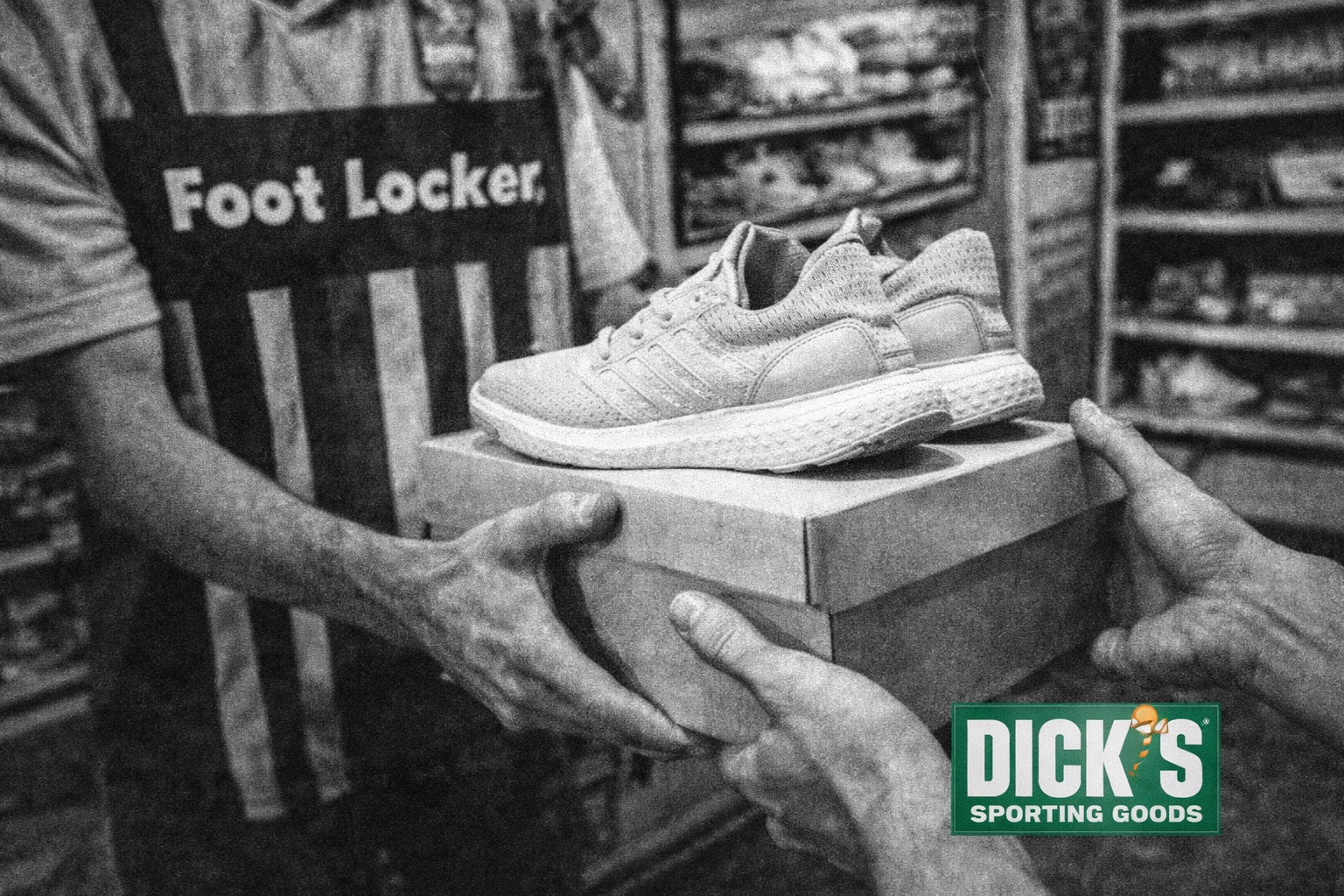
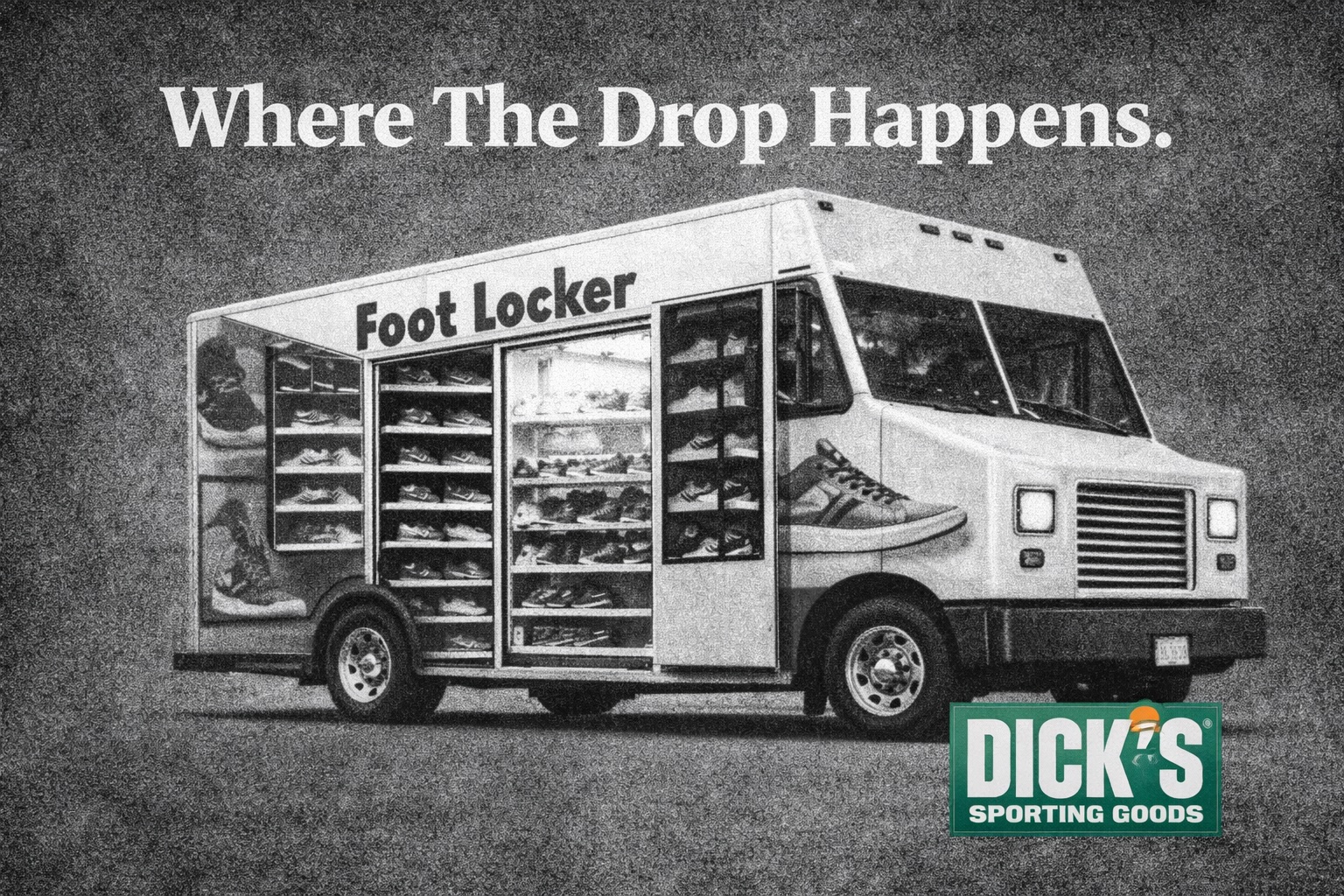
WHERE THE DROP HAPPENS.
Strategy Note
The tagline works on two levels simultaneously, which is why it earns its place. On the surface, it is a geographic declaration, the truck is the place where the drop occurs. That is a direct, benefit-driven statement that answers the most important question for any sneaker consumer: where do I go to get access? For Gen Z, who has been conditioned by digital raffles and bot-driven scarcity to feel like legitimate access is permanently out of reach, a spatial answer is subversive. The drop is not in an app. It is not in a queue managed by an algorithm. It is here, in the physical world, where you actually are.
Below the surface, the phrase reclaims ownership of the word ‘drop’, a term that has been co-opted by resale culture, and relocates it to a physical, community-centered space. This directly addresses the campaign goal of repositioning DICK’S and Foot Locker from transactional legacy retailers to culturally credible facilitators of real access. The period at the end is intentional: it is not an invitation or a question. It is a statement of fact. Confident, declarative, and non-negotiable: which is exactly the tone the target audience responds to. The creative brevity also respects the OOH format; on a billboard or transit shelter, three words and a period is enough.
Placement suggestion: Pair short headline on billboards with a clear CTA (e.g., “Scan for city stops” or “Track the route — QR”).
PLACEMENT & AD SPECS : OOH/Digital OOH
Transit shelters, digital billboards near festival perimeters and high-foot-traffic corridors. Use bold typography, matte black backgrounds and a single accent to match truck aesthetic. Creative: 16:9 hero art + 4:3 transit variants.
Suggested specs
Digital billboard: 1920×1080 (16:9) | Transit shelter: 1080×1920 (vertical) | Transit cards: 600×800
Creative notes
Minimal copy (headline + QR), high-contrast white typography, strong focal image of truck/sole, subtle grain overlay to match hero imagery.
Geo Targeted Mobile
In-event geofenced mobile ads (within a 1-mile radius of venues), SMS push to opt-ins, and programmatic mobile banners during event windows.
Editorial Placements
Sponsored content and native placements with Complex, Hypebeast (paid/native), and festival program ads for authenticity and audience alignment.
Placement Rationale
Complex reaches a documented 50M+ monthly unique visitors and is the most trusted editorial authority for sneaker culture among Gen Z consumers aged 16–28. The back cover placement commands the highest-visibility position in the book, ensuring the campaign image: the truck, the tagline, and the QR, is the last thing a reader sees before closing the issue. The August issue aligns with peak summer festival season and The Drop Truck’s active tour window, making the placement contextually relevant. Complex’s audience skews heavily toward the sneaker-engaged, culture-first consumer the campaign is designed to reach, and the editorial adjacency lends the activation a credibility that a mass-market publication cannot replicate.
Media Mix & High-Level Budget
Sample 8-week paid window (launch + tour):
OOH / Digital billboards & transit: 45% of spend — high-visibility near event perimeters
Geo-targeted mobile & SMS: 25% of spend — in-event targeting and retargeting
Editorial partnerships (Complex + Hypebeast): 20% of spend — sponsored editorial + co-branded content
Production & creative: 10% of spend — hero assets, localized creative, QR landing pages
Example spend (illustrative): $500,000 total — OOH $225K / Mobile $125K / Editorial $100K / Production $50K. Adjust to campus/market density and earned-pull from partners.
Notes: prioritize buys in top festival markets and FIFA host cities; negotiate daypart guarantees around event start/peak foot times.
Measurement & Reporting
Primary KPIs (paid → integrated):
Physical attendance at stops (tracked via QR scans & timed window entries)
Gen Z brand favorability lift (pre/post surveys in target markets)
Organic impressions and earned media mentions during activation windows
App downloads and SMS sign-ups attributable to geo-targeted creatives
Reporting cadence: daily dashboard during tour operations (attendance & QR scans), weekly creative performance, and a comprehensive post-tour report with brand lift and sustainability outcomes.
Attribution notes: use a mix of deterministic (QR / SMS codes) and probabilistic (geo-fence modeling) attribution to separate paid-driven attendance from organic discovery.